Specification
|
Product Name
|
Marine Deck Crane |
|
Model
|
IHI,KAWASAKI |
| Parts including high pressure pump, hyd motor |
| Vane pump, Hyd spare parts etc |
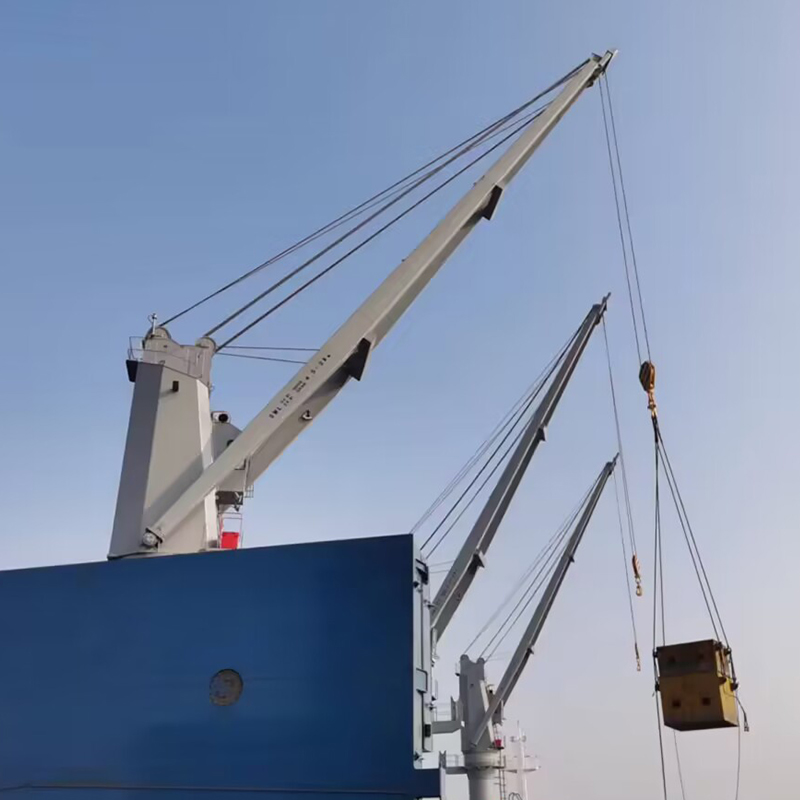
Product AdvantagesHigh Lifting Capacity for Marine Deck ApplicationsProvides reliable lifting power for container handling, offshore operations, and general cargo—ideal for vessel operators and boat parts and supplies dealers.Corrosion-Resistant ConstructionBuilt from marine-grade materials to withstand saltwater, UV exposure, and heavy-duty use—an essential feature in marine deck operations and marine spare parts inventories.Customizable for Various Vessel TypesFlexible mounting and design options allow integration into different ship sizes and structures, making it a perfect product for a professional marine parts store or maritime services provider.Compatible with Marine Electrical and Hydraulic SystemsWorks with modern control panels and hydraulic setups, often used alongside tools provided by ammeter suppliers and monitoring systems.Easy Maintenance and Operational SafetyDesigned for reduced downtime, with simple maintenance protocols that meet international standards—reliable for high-traffic boat service parts needs.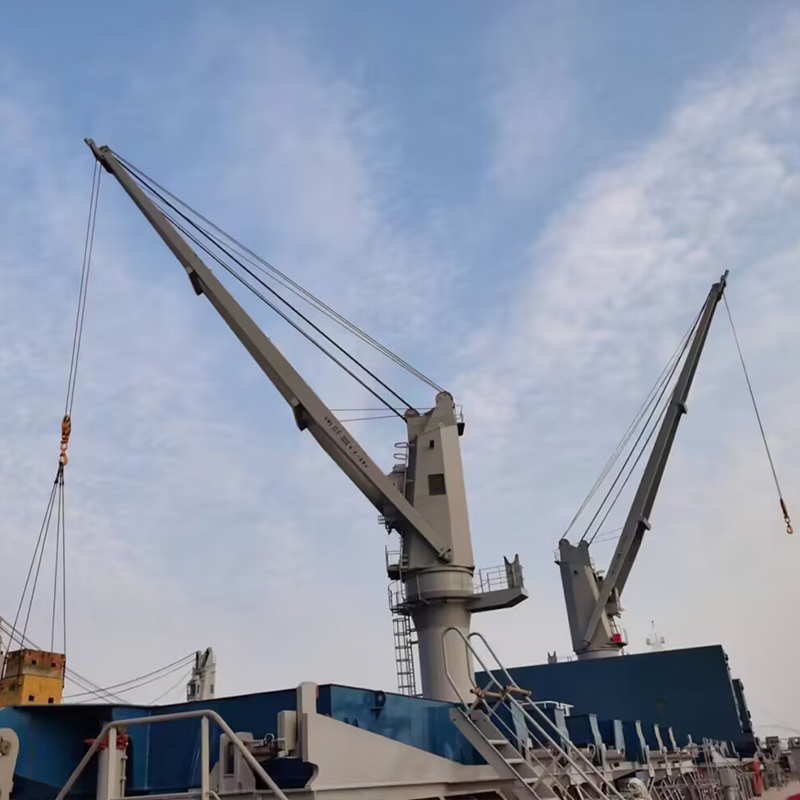
About Us
Your Trusted Partner in Marine Spare Parts and Ship Maintenance Solutions
Core Capabilities & Quality Assurance
- Decades of Expertise: Led by a technical expert with over 30 years of experience in renowned shipyards, we are proficient in ship maintenance processes and technologies.
- Efficient Maintenance Services: Our ship repair team ensures fast response and shorter repair cycles to minimize customer downtime.
- Tailored Solutions: We offer customized maintenance services for various vessel types, meeting specific operational needs with precision.
- Strict Compliance: Every product is supplied under strict quality control systems and complies with international marine safety standards.
Production Strength
We collaborate with long-term partners across multiple countries to ensure stable, high-quality marine spare parts supply.
Our supply covers engine room equipment, deck machinery, outfitting parts, marine pumps, and instruments—backed by mature sourcing and technical validation processes.
Sustainability & Compliance
Committed to compliance and safety, we ensure every marine part provided is reliable and environmentally responsible.
We maintain up-to-date certifications and adhere to industry regulations to support sustainable maritime operations.
Customer Collaboration Process
- Inquiry & Technical Evaluation
- Customized Proposal & Quotation
- Rapid Fulfillment & Shipment
- Ongoing Support & Maintenance Services
We streamline every cooperation step to save shipowners and management companies time and reduce operational costs.
Global Service Capability
Our business scope spans many countries, and we maintain strong relationships with reputable marine enterprises globally.
We understand the complexities of international marine logistics and are experienced in delivering consistent, high-value services worldwide.
Let JIEXI Fast Marine Service be your reliable partner in keeping your fleet operational, safe, and efficient—every mile of the way.
Contact JIEXI now for bulk pricing, customization options, and expert technical support. Your reliable partner in marine spare parts and shipboard lifting systems.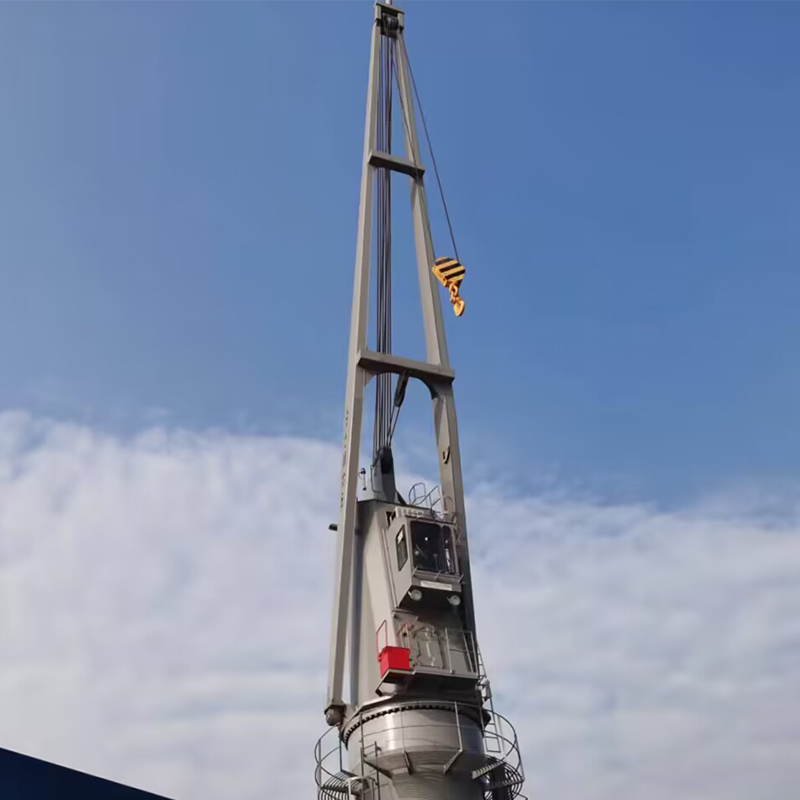
Introduction to Machinery
Marine crane is a kind of special crane for carrying out transportation operations in the Marine environment, which is mainly used for the transportation and transfer of cargo between ships, replenishment at sea, dropping and recovering of underwater operation equipment and other important tasks. The special application environment at sea brings great challenge to the control of Marine crane. On the one hand, similar to various underdriven crane equipment on land, it is necessary to control the swing generated during the load transportation process to ensure its positioning accuracy and transportation efficiency; On the other hand, because the crane is fixed on a moving platform such as a ship, the movement of the platform itself has a strong impact on the load movement, and in many cases, the movement at the lifting and landing point of the load is inconsistent with the movement of the crane itself. Specifically, in the working process, the crane ship and the receiving ship will pitch, roll and sink with the waves, and these movements will cause the load to swing; Especially in the lifting process, such movement of the ship is easy to cause the load that has been lifted to collide with the deck again, or make the load that has been put down but has not yet left the hook suspended again, which will threaten the safety of the operation. This coupling movement may cause very serious consequences, especially when conducting inter-ship ammunition replenishment.
The control of Marine crane has been widely concerned by military and civil Marine engineering in various countries, and the study on the control of this kind of nonlinear and strongly coupled underdriven system under special disturbance has important theoretical value and universal significance.
The control of Marine crane is mainly divided into two aspects: vertical control to reduce the influence of hull motion and lateral anti-swing to restrain load swing. For vertical control, the common method is to connect the receiving ship through the mechanical structure on the crane ship and sense its relative motion, so that the change of rope length is synchronized with the heave motion of the receiving ship, so as to compensate the relative motion of the two ships, and complete the load take-off and landing transportation on this basis. This method has special requirements for the mechanical structure of the crane, and also has greater restrictions on the lifting quality
Component
Derrick gear
It is composed of derrick, lifting post (or lifting mast), rigging and winch (or cargo winch). The derrick is the traditional cargo lifting equipment on the ship. Although the ropes are many and the operation is troublesome, it has been widely used because of its simple structure, easy manufacture and low cost.
Single lever operation and double lever operation
There are two ways of loading and unloading cargo with boom device: single boom operation and double boom operation. Single rod operation is to use a boom for loading and unloading of goods, after the boom lifts the goods, pull the cable to swing the goods with the boom to the outboard or cargo hatch, and then put down the goods, and then turn the boom back to the original position, so round trip operation. Loading and unloading each time with a rope swing boom, so low efficiency, labor intensity. Two boom operation with two boom, one is placed above the cargo hatch, the other is extended overboard, the two boom fixed to a certain working position with a cable. The cargo lines of the two booms are connected to a hook. Cargo can be unloaded from the ship to the dock, or loaded from the dock to the ship, as long as the two lines are collected and dropped separately. The loading and unloading efficiency of double rod operation is higher than that of single rod operation, and the labor intensity is lighter.
Double kilo cable boom device and Ebel boom device
The improved boom device came later. The double kilo cable boom device is improved by the single boom operating boom device, in which there are only cargo rope and two groups of left and right separate kilo rope. The derrick is operated by a cargo winch and two thousand catty cable winches, which is convenient to operate and has high loading and unloading efficiency. The Ebel boom device is an improvement of the double-rod operated boom device, which includes a cargo winch, a one-pound cable and a tow winch. The boom can be quickly placed in any position with the help of a winch. At the same time, it can also be fixed within the working radius of the boom to lift and drop the goods to improve the loading and unloading efficiency. This is an important step towards fully automated cargo handling
Device Classification
Boom equipment can be divided into light and heavy two categories. The lifting weight of less than 10 tons is a light boom device, and the lifting weight of more than 10 tons is a heavy boom device. The lifting weight of the boom depends on the use of the ship. General dry cargo ship's light derrick single-rod operation weight is 3 to 5 tons, double-rod operation is 1.5 to 3 tons; The lifting weight of 10,000 ton dry cargo ships can reach 10 tons in single rod operation and 5 tons in double rod operation. To load and unload containers on modern multi-purpose ships, the lifting weight of the boom should be able to lift at least 20 feet of containers (20 tons). Heavy derrick is used to load and unload large machinery, rolling stock and other heavy goods, the general cargo ship is only set 1 ~ 2, the lifting weight is mostly 10 ~ 60 tons, there are 60 ~ 150 tons, a few up to 300 tons. Dry cargo ships generally have two light booms in each hold; Giant dry cargo ships often have four light booms per hold.
Deck crane
Machinery installed on the upper deck of a ship. This kind of crane is compact, so that the ship has more deck area to use, and has less impact on the sight of the bridge upstairs. Deck crane is easy to operate, high loading and unloading efficiency, flexible and flexible, and there is no tedious preparation work before operation.
Deck cranes commonly used are fixed rotary cranes, mobile rotary cranes and gantry cranes. There are two transmission modes: electric transmission and electric - hydraulic transmission.
Fixed rotary crane
This crane is the most widely used and can be operated alone or in pairs on the left and right sides. The lifting weight is generally 3 to 5 tons. In the multi-purpose ship, it is required that a single crane can lift a 20-foot container, and a double crane can lift a 40-foot container (30 tons), and its lifting weight can reach 25 to 30 tons.
Travelling rotary crane
When loading and unloading cargo requires a large span of the crane, and the crane boom is not too long, mobile rotary cranes are often used. The mobile rotary crane has two kinds of lateral movement and longitudinal movement along the ship.
Gantry crane
This crane is widely used for full container ships and barge-carrying vessels, usually in quadruped or C-type. There is an extended boom, lifting rail and a movable bridge and cab. The horizontal main beam of the bridge is higher than the container piled on the deck, and has an automatic positioning device, which can accurately place the container in the container compartment or pile on the deck when loading. There are more gantry cranes on barges than on container ships, and the lifting weight can reach several hundred tons.
Other handling machinery
There are mainly lifts, elevators and conveyors. A lift is a machine on a ship that moves vertically along a guide rail for lifting and lowering cargo between decks. For example, the ro-ro ship uses lifts to connect various decks to transport goods. The lift on the ro-ro ship has several kinds, such as scissor type and chain type, its length is 9 ~ 18.5 meters, and the width is 3 ~ 5 meters. Some barge carriers are also equipped with lift cargo barges, but the lifting capacity is much larger than that on ro-ro ships. The elevator is a continuous transport of goods in a vertical direction or a large inclined direction. The conveyor is a continuous transport of goods in the horizontal direction or in the direction of a small slope. These two kinds of machinery are often used on the dump ship or the ship for loading and unloading through the side door.


